Mockmill · Editorial guide
Fresh flour with Mockmill: a measured first loaf
A first loaf is easier to understand when only one part of the recipe changes. Start with a modest proportion of freshly milled wheat, weigh everything and compare the dough with a familiar bake. This guide is a starting formula, not a promise that every flour or kitchen will behave identically.
Published:
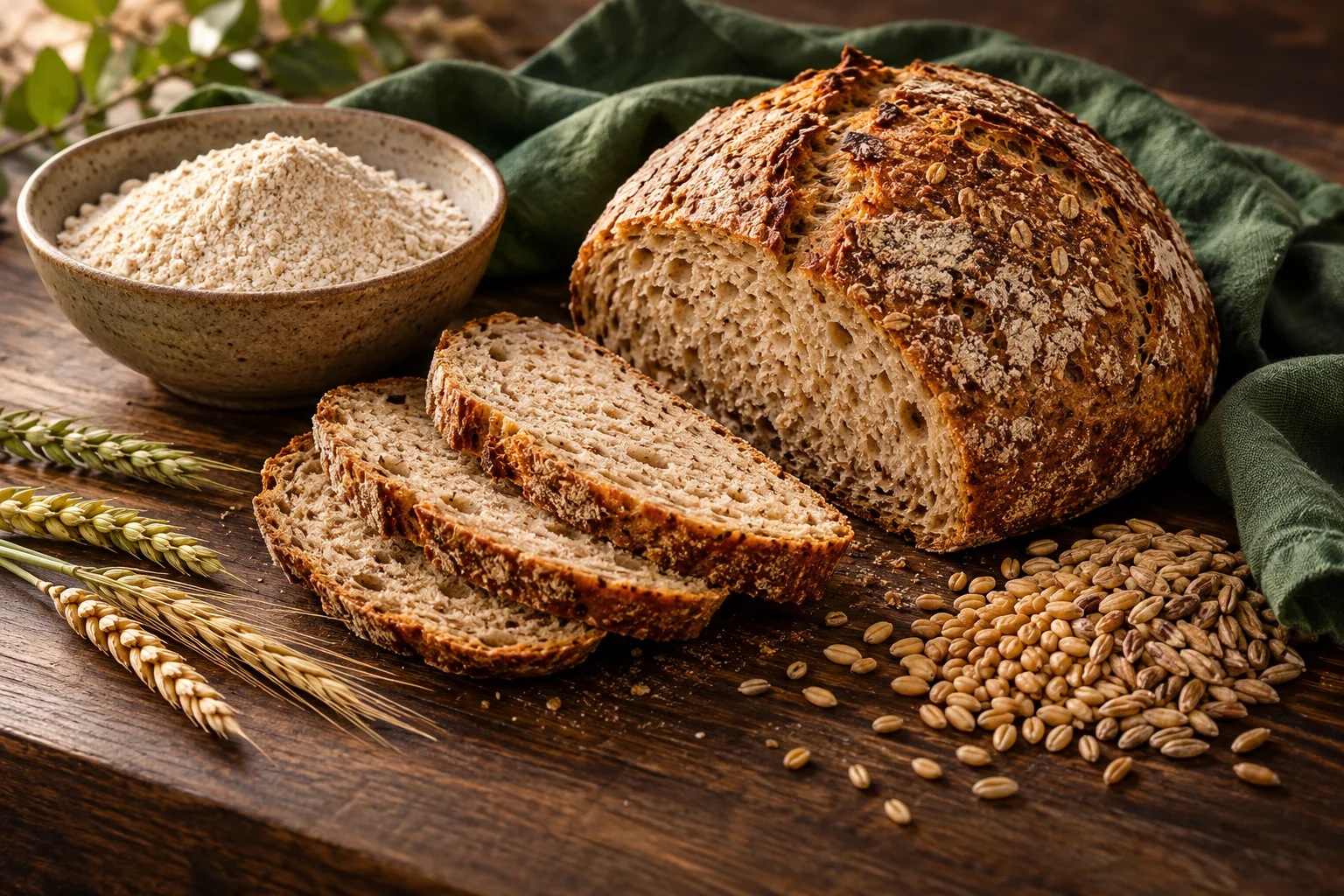
Grain and preparation
Choose clean, dry, food-grade wheat permitted by your model’s milling table. Check the grain for foreign material before it reaches the hopper. A stone grain mill is not a general-purpose processor: do not add nuts, oily seeds, damp grain or flavourings simply because the bread recipe includes them. Add those ingredients separately during mixing where appropriate.
Check the supplied Mockmill instructions for your exact model, electrical version and adjustment method. The lever on a Mockmill 100/200 and the hopper adjustment on a Lino are not interchangeable operating instructions.
A small, manageable formula
For one medium loaf, use a 500 g total flour blend. Replacing one third with fresh wholemeal gives you a clear change to observe without demanding a completely new baking routine. Wholemeal wheat varieties differ, so hold back a little water rather than forcing a fixed hydration.
Set the texture before chasing a timetable
Mill the wheat to a flour texture suitable for bread, following your model’s adjustment procedure. Let the flour cool if necessary before measuring your dough temperature. Keep the milling chamber dry and unplug before maintenance.
Mix until no dry flour remains, then allow a short rest before the final kneading. Add reserved water gradually if the dough feels too firm. Record the final water amount: that number is more useful for the next bake than describing a dough only as “sticky”.
Read the dough, then record the result
Use your established yeast-bread method for kneading, fermentation, shaping and baking. Judge fermentation by the dough’s expansion and strength rather than copying a universal number of hours. A warmer room, different yeast or a different wheat can change the pace.
For a starting bake, a preheated oven around 220°C can suit a simple lean loaf; follow your baking vessel’s instructions and your trusted loaf method. Bake thoroughly, then let the loaf cool before slicing. Do not taste raw flour or raw dough.
What to change next time
Slice after cooling and compare crumb, crust and flavour with the loaf you normally make. If the bread is denser than you want, keep the recipe the same and adjust only the wholemeal proportion, water or fermentation endpoint on the next attempt.
Label leftover grain clearly and store it dry according to the grain supplier’s instructions. Mill a recipe-sized amount first; having a large hopper is not a reason to prepare more flour than you need.
Ingredients
- 350 g strong white bread flour
- 150 g freshly milled wholemeal wheat flour
- 330–360 g water, with some held back initially
- 10 g salt
- 5 g instant dried yeast, or the amount appropriate to your chosen bread method
Method
- Check and mill the permitted dry wheat according to the supplied manual.
- Weigh both flours; mix with most of the water, then add salt and yeast according to your chosen method.
- Rest briefly, knead and add reserved water gradually if needed.
- Ferment until the dough has developed, shape and proof by observing the dough.
- Bake thoroughly using your established lean-loaf method; cool before slicing.
Questions & answers
Can I put sunflower seeds through the mill with the wheat?
Do not assume that you can. Follow the exact milling table. For this loaf, keep oily additions out of the mill and add them separately when mixing.
Must I use 100% wholemeal for the first loaf?
No. A smaller freshly milled proportion makes it easier to compare hydration and fermentation before changing the whole formula.