Hawos · Editorial guide
Hawos Phönix: fresh oat flakes for a simple breakfast
A flaker and a flour mill do different jobs. Hawos Phönix presses grain between rollers, giving you flakes for porridge and other recipes rather than fine flour. Begin with one breakfast-sized portion so you can choose a texture without preparing a large batch.
Published:
Start with the right oats
The Phönix instructions identify naked oats and other soft grains as suitable for flaking without preparation. Naked oats are not the same as ordinary oats still enclosed in an inedible hull. Buy food-grade grain intended for human consumption and check the supplier’s description.
This article uses naked oats. Harder grains have a separate preparation procedure in the manufacturer’s instructions; do not apply a flour mill’s dry-grain routine to every flaker ingredient or invent a soaking method.
Fix the flaker securely
Check that the intended work surface suits the supplied clamp and allows the handle to turn freely. Attach the flaker as described in the manual before loading grain. Keep the hopper accessible and do not use it as a carrying handle.
Adjust the roller gap only while the hopper is empty, then secure the adjustment as instructed. Start with a small amount of oats and inspect the flakes. A finer flake gives a different texture from a thicker one; neither setting is a promise of a particular cooking time.
A two-person breakfast
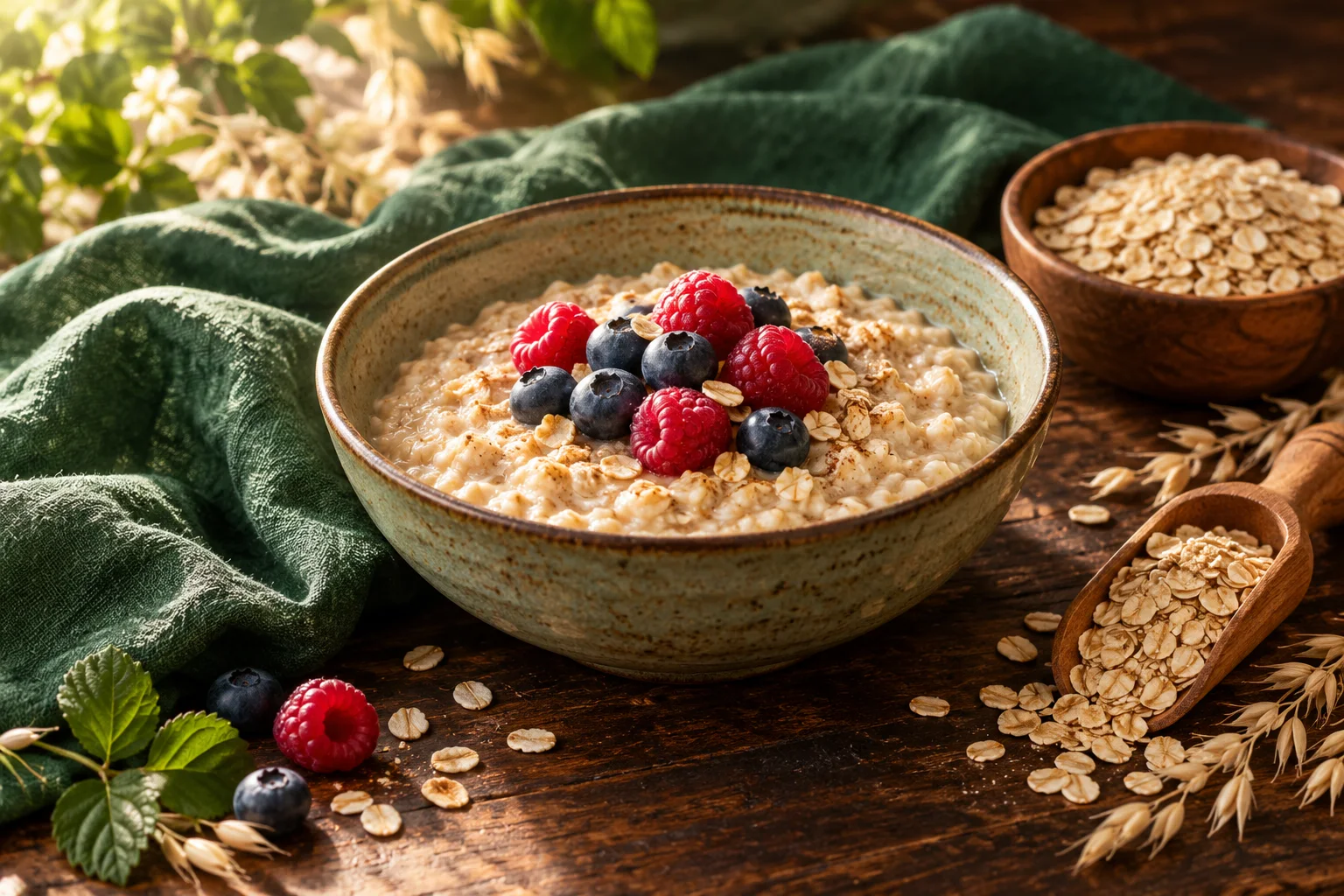
Weigh 100 g naked oats and prepare the flakes. Put the flakes in a saucepan with about 400 ml water, then bring to a gentle simmer while stirring. Add a little more water if you prefer a looser porridge. Cook until the texture suits you and the flakes are cooked through.
Milk can replace some of the water if it suits your diet; stir and watch the pan so it does not catch. Finish with fruit only after cooking. Taste before adding sweetener: the apple, berries or other topping may provide enough sweetness for your preference.
Choose a texture deliberately
For the first attempt, keep the grain and the liquid amount the same. If you want a smoother breakfast next time, change only the flake setting or cook a little longer with additional water. If you prefer more bite, compare a thicker flake in a second small batch.
Write down the grain name, roller setting and the final amount of liquid. There is no need to assign a nutritional or medical benefit to a particular thickness: the useful result is a breakfast texture that you can repeat.
Finish the routine
Clear the flaker according to the supplied instructions, keeping fingers away from the rollers and mechanism. Protect the wooden body from excessive moisture and steam, and follow the manual for cleaning rather than putting the appliance under running water.
Cook only what you plan to serve, or cool and refrigerate leftovers promptly in a suitable covered container. Freshly made flakes are not a reason to leave cooked porridge on the worktop for the rest of the day.
Ingredients
- 100 g food-grade naked oats permitted by the supplied instructions
- About 400 ml water, with more as needed
- A small pinch of salt, optional
- Fresh apple or berries for serving
- Milk or a suitable alternative, optional
Method
- Clamp the Phönix securely and check the supplied instructions.
- With the hopper empty, set and secure the roller gap.
- Flake a small test portion, then prepare the remaining oats.
- Cook the flakes with water, stirring and adjusting the liquid until cooked and suitably soft.
- Serve with your chosen toppings and clean the flaker as instructed.
Questions & answers
Can Phönix replace a stone flour mill?
No. It is a roller flaker: flakes and flour are different outputs and suit different recipes.
Can every grain go through without preparation?
No. The supplied manual distinguishes soft grains such as naked oats from harder grains that need a separate preparation process.